MyBet Casino Notes
MyBet Casino account safety and transaction records
 Available in US
The public description of MyBet Casino combines a game catalogue, English-language customer support and cryptocurrency payment methods. Those features involve several kinds of records: account messages, game rounds, wallet transactions and provider statements. They should not be treated as interchangeable evidence. A careful consumer assessment separates who controls an account, what happened in a particular transaction and what an external review says about the service. None of those distinctions is a guarantee of access, recovery or lawful availability in Australia.

Table of Contents
- Account identity is separate from brand recognition
- Recognising impersonation and suspicious messages
- Verification requests and the exposure of personal data
- Game records and payment records tell different stories
- Crypto finality and the limits of a refund assumption
- How to describe a support issue precisely
- Ratings, terms and the question of recourse
- Privacy and responsible handling of evidence
- Questions about account and payment evidence
- Final assessment: evidence should match the question
Account identity is separate from brand recognition
A familiar name and logo do not establish who owns or operates an online service. Two websites may have similar names but represent unrelated companies, and a support address may refer to a processing partner rather than the gambling operator. For MyBet Casino, the distinction is particularly important because mybet.com and the separate Australian wagering business at mybet.com.au should not be conflated. The licensing analysis explains the associated entities and why a domain must be matched to the correct authorisation.
An account identifier, a payment record and a legal-entity name answer different questions. The identifier points to a profile within a particular service. A payment record shows a movement or attempted movement of value. A legal-entity name identifies the company that may be responsible under a contract. A dispute becomes difficult to reconstruct when these elements are collapsed into a generic reference to the brand, because the party that operates a site is not necessarily the party that processed a card purchase or broadcast a game stream.
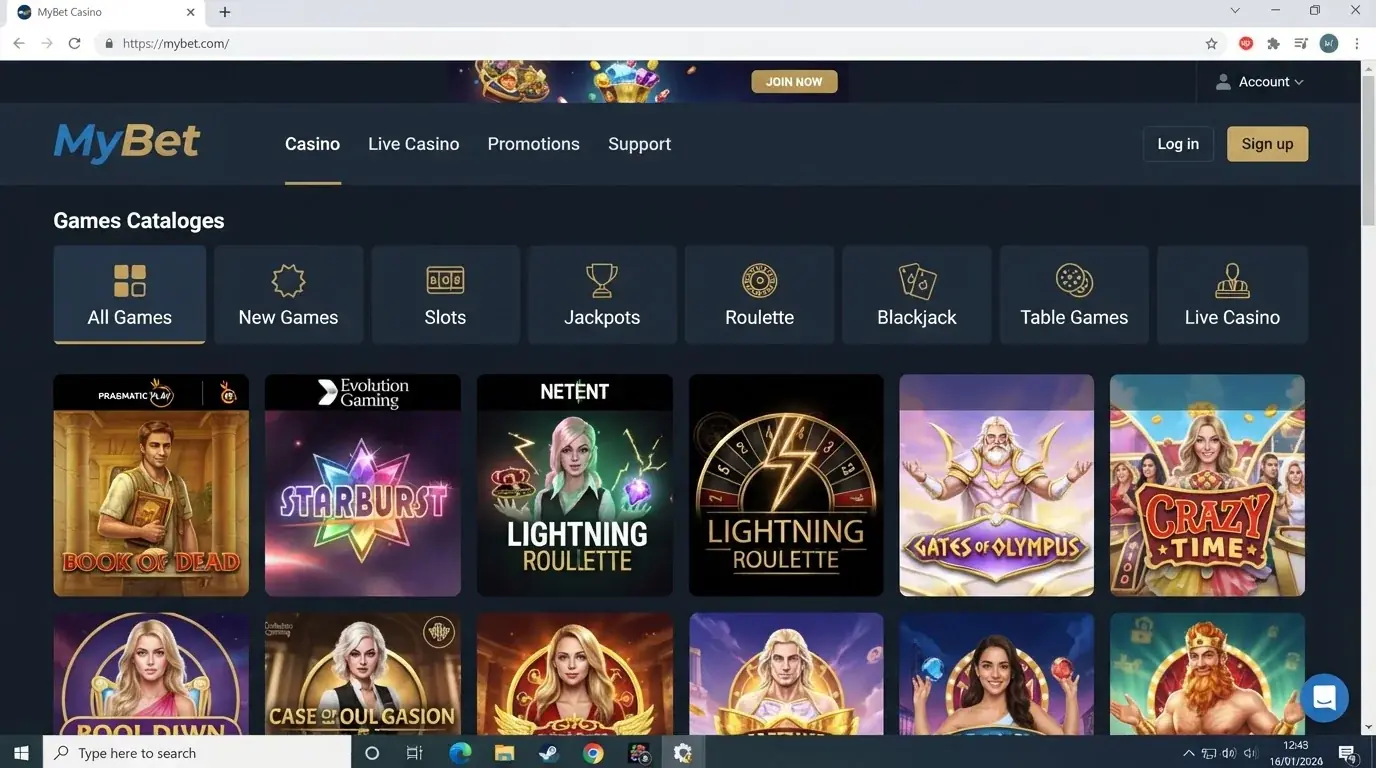
Public catalogues and screenshots are useful for describing a product, but they are limited evidence of an individual account’s history. A catalogue entry may identify a payment asset or a software supplier; it cannot demonstrate whether a specific transfer was credited, a round was accepted, or an identity document was reviewed. Such conclusions depend on records tied to the actual event, not on the overall breadth or appearance of the product.
Recognising impersonation and suspicious messages
Messages that demand immediate action can be used to create a false sense of urgency. A sender may copy a brand name, place a convincing logo inside an email or ask someone to provide credentials using a link. Those visual elements are not proof of authenticity. A message promising guaranteed winnings, an instant reversal of blockchain funds or an exception to ordinary identity checks deserves particular caution because it tries to replace a verifiable process with a claim of special access.
Passwords, one-time authentication codes and wallet recovery phrases serve different purposes. A password controls access to an account; a one-time code supports a specific login or verification event; a wallet recovery phrase can give broad access to cryptocurrency assets. They should not be handled as ordinary customer-service references. A request to send a recovery phrase or private key to a person claiming to be support is a major warning sign, even if the message includes a real-looking transaction hash.
Links in search results, social messages and unsolicited emails can also lead to imitation sites. The name visible in a page title may differ from the actual destination domain. An official-looking phone number can be copied into a fraudulent page, and a helpdesk conversation on an unrelated platform does not establish a contractual relationship with the casino. The practical safety question is whether the channel can be attributed to the correct operator, not whether the artwork resembles its public branding.
Verification requests and the exposure of personal data
Gambling services may use identity checks to enforce account rules, confirm ownership or review transactions. A request for a document creates its own privacy risk: an identity image may contain an address, date of birth or document number that is more sensitive than the question under investigation. Information should be understood according to the stated purpose and the applicable privacy arrangements rather than sent reflexively because a message uses the abbreviation KYC.
Document verification is also distinct from the safety of a gaming product. The existence of a verification step does not mean a game has favourable odds, that a payout has been approved or that an operator is licensed to provide a particular service in Australia. Conversely, an absent verification request in a general product description does not establish how an individual account will be handled. Each of those propositions would require different evidence.
When assessing a request after the fact, preserve the exact wording, date, channel and stated reason. Those details help distinguish a routine account-security message from a demand that appeared unexpectedly during a payment dispute. Avoid forwarding the contents of sensitive documents to multiple unrelated recipients for the sake of seeking opinions. A record of what was requested can be useful without reproducing every personal detail in public.
Game records and payment records tell different stories
A game record concerns a particular round, including the game title, stake, outcome, timestamp and any round identifier supplied. A blockchain transaction concerns an asset movement on a named network, generally identified by a transaction hash and destination. A bank or card entry concerns an acquisition or payment processed under its own terms. A cryptocurrency casino can involve all three record types, but one record does not automatically validate another.
Suppose a wallet history shows that a token transfer reached an address. That may demonstrate network-level settlement without establishing how the receiving service applied the amount internally. Likewise, a completed game round may change an in-service balance without creating an immediate blockchain event. The accounting layers can be linked, but they should not be assumed to contain the same timestamps, currencies or values. The payment overview explains why the network and the asset must be distinguished.
For an interrupted game, a screen recording or screenshot can capture the visible interface but may omit backend events. The animation of a winning or losing symbol is not a substitute for a round record if the issue is whether a stake was accepted. A detailed chronology of what the interface displayed and when a response arrived is more informative than a single picture of the final balance. Even then, a visual record may need to be read alongside transaction and account logs.
Crypto finality and the limits of a refund assumption
Blockchain transfers often differ from payments that can be challenged through a conventional card process. Once a transaction is recorded on a chain, the sender may not be able to cancel it unilaterally. Recovery may depend on who controls the destination, whether the receiving system recognises the asset, and whether any responsible party is willing and able to assist. None of those conditions follows from the existence of an online chat button.
Network compatibility is a distinct hazard. USDT, for example, can exist on more than one token network, and a matching asset ticker is not sufficient evidence that a destination supports the selected route. If an asset moves through a separate conversion intermediary, the card payment, exchange quote, blockchain transfer and final account credit may each have different reference numbers. A request for a single universal transaction ID can therefore obscure the stage at which a problem actually occurred.
Market movement adds another complication. A token quantity can remain unchanged while its value in Australian dollars or another currency changes. Fees can reduce the amount ultimately received even when the network delivered the intended token. Comparing a later exchange rate with an earlier payment record can create the appearance of a missing balance if the date, unit and fee basis are not considered. A consumer complaint should separate a value change from a disputed transfer or game settlement.
How to describe a support issue precisely
Clear issue classification helps readers understand a dispute without implying that a particular result is guaranteed. An identity question concerns the ownership and documentation of an account. A game question concerns a round and the rules that governed it. A payment question concerns the movement, conversion or crediting of value. A privacy question concerns the collection and use of personal data. An operator may direct these issues to different teams, but the underlying facts should remain consistent.
| Issue type | Relevant record | Common confusion |
|---|---|---|
| Account identity | Dated account notices and the stated request | Assuming a logo proves who sent the message |
| Game round | Game title, rule version, stake and round ID | Treating an animation as a final ledger entry |
| Token transfer | Asset, network, destination and transaction hash | Confusing a chain confirmation with account credit |
| Conversion | Quote, time, units and fee disclosure | Comparing amounts in different currencies |
| Support exchange | Timestamped request and written response | Assuming closure means the underlying issue was resolved |
A brief description that puts the event first is usually clearer than a long narrative about an overall rating. For example, the question might be whether a particular token reached an address, whether a game round appears in a log, or why a verification request referred to a certain account detail. These are different matters with different evidence. Independent review scores and public complaint summaries cannot resolve the transaction-specific facts by themselves.
Ratings, terms and the question of recourse
A published casino rating is an editorial assessment of a service, not an individual contract or a financial guarantee. It may combine information about user reports, terms and other factors into one score. The score cannot replace the precise wording of a condition that applies to a disputed event. MyBet Casino is discussed in external reviews, but the presence of a numerical rating should not be confused with an outcome for any particular customer.
Terms concerning withdrawal thresholds, game exclusions or unusual play are particularly easy to misread when quoted outside their surrounding clauses. A restriction may concern eligibility, how an amount is calculated or which events trigger a review. Those are separate questions from whether a game operates with a particular theoretical return. To examine the meaning of a clause, the relevant text and its application to the event matter more than the general category in which a review places it.
Where an online casino operates outside the Australian permitted market, it is unsafe to assume that protections associated with a domestically licensed wagering business will carry over. The regulatory context is covered in the Australian licensing discussion. Nothing about a provider list, payment coin or brand similarity changes the statutory position. For readers facing financial harm, an independent support service can be more useful than relying on marketing or an aggregate rating.
Privacy and responsible handling of evidence
Detailed records may contain sensitive personal information, so completeness is not the same as sharing everything. A transaction hash on a public blockchain can reveal more than a single payment when linked to an address with a wider transaction history. A screenshot can expose a phone number, wallet balance or account name unintentionally. The safest description of a public incident usually separates the facts necessary to explain the problem from identifiers that are not needed by the audience.
Time zones and currency units can also affect how records are interpreted. A round log may be in one time zone, a wallet explorer in another and a statement in local time. An amount expressed in units of cryptocurrency is not identical to a value expressed in dollars. Recording which unit and time basis each entry uses helps avoid false inconsistencies. A timeline is an analytical aid; it should not be embellished with assumptions about what an unseen system did.
When gambling has contributed to distress, debt or loss of control, the central issue may no longer be the technical details of a particular event. Gambling Help Online provides free, confidential support for Australians at gamblinghelponline.org.au, and the National Gambling Helpline is 1800 858 858. Help can be sought independently of a casino’s response or any uncertainty about an overseas service’s legal arrangements.
Questions about account and payment evidence
Does a blockchain confirmation mean a casino balance was credited?
No. A chain record shows an on-chain event. The receiving service’s own ledger is a separate record and may not update at the same moment.
Can a public review score settle a payment dispute?
No. A rating summarises an assessment of a service. The disputed event requires transaction-specific records and the relevant terms.
Is a mobile screenshot proof of an official account message?
No. A screenshot alone cannot authenticate a sender or establish which legal entity controlled a communication channel.
Why are currency units important in a crypto dispute?
Token quantity, exchange-rate value and the amount shown in a gaming ledger can differ. Comparing them requires the time, currency and fee basis for each entry.
Final assessment: evidence should match the question
MyBet Casino’s game, service and payment descriptions raise distinct questions about identity, game settlement, crypto transfers and customer records. None is resolved merely by another part of the interface appearing credible. A clear assessment matches the legal entity to its domain, the event to its own log, the asset to its network and any disputed condition to the applicable terms. That approach supports careful reading while preserving the central caution: gambling can cause serious financial harm, and cryptocurrency transactions can involve irreversible transfers and market volatility.
Read next
- Mobile interface and usability
- Cryptocurrency transactions
- Licensing and Australian law
- Game rules and catalogue
Published by the Mybet team.