MyBet Casino Notes
MyBet Casino payment methods
 Available in US
The MyBet Casino payment catalogue centres on digital assets. Identifying a coin is only the start of understanding a payment: the blockchain network, conversion route and settlement record determine what actually moves.

Table of Contents
- Crypto coins in the MyBet Casino catalogue
- Network selection changes the transfer
- Card payments and crypto conversion are different rails
- Withdrawal ceilings and the monthly accounting window
- Transaction finality, fees and volatility
- Reading crypto payment records responsibly
- Questions about crypto payments
- Coins are only one part of a payment
Crypto coins in the MyBet Casino catalogue
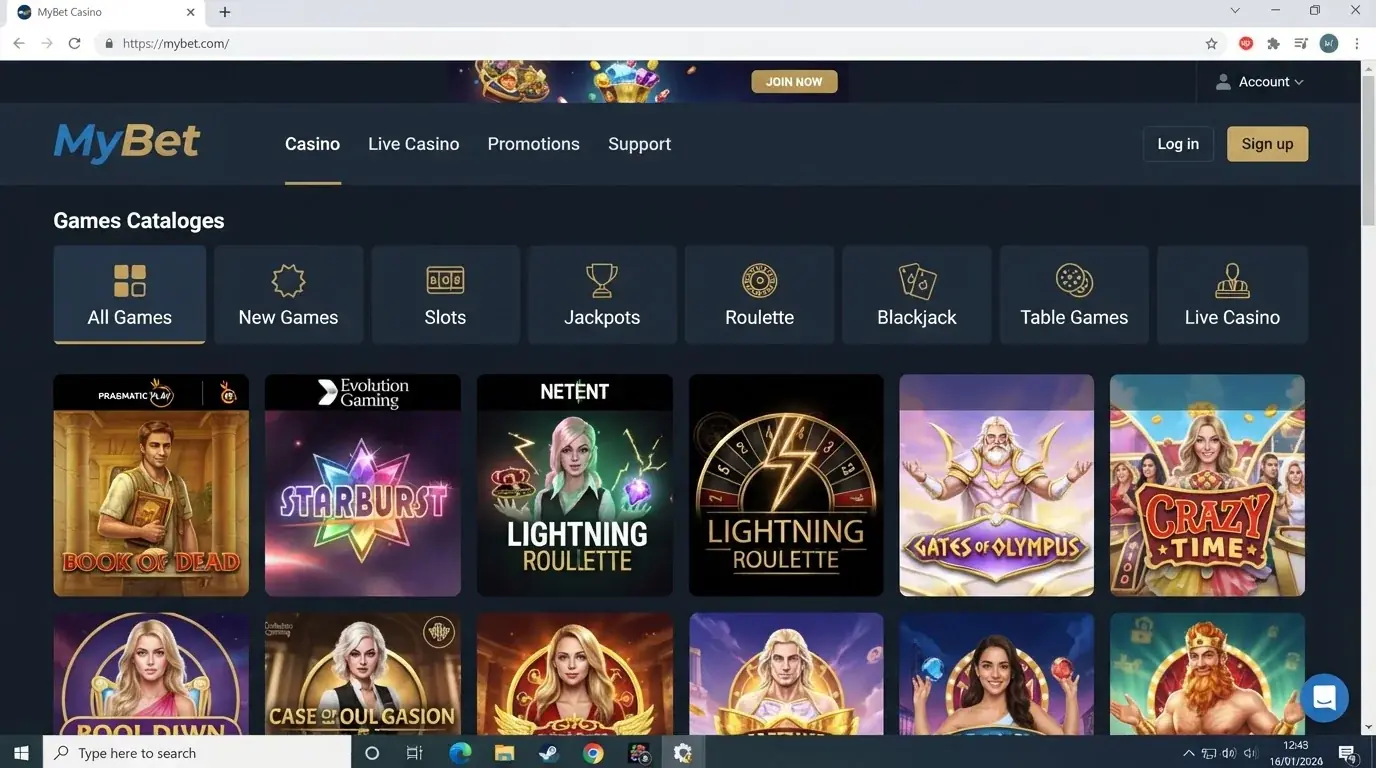
MyBet Casino is presented as a crypto-first gambling product. Casino Guru’s payment catalogue includes DOGE, USDT, BNB, ETH, AVAX, TON, BCH, SOL, ADA, TRX, LTC and USDC. These tickers describe digital assets; they do not by themselves describe the exact chain, token contract, deposit address, wallet exchange rate or destination capability used in a particular transaction. That separation is fundamental to understanding payment risks.
The same token label can appear on different networks. For example, USDT may be issued on several chains, each with its own token contract, network fee, confirmation method and address compatibility. An asset shown in a casino payment list therefore does not imply support for every possible version of that asset. The practical technical risk is a network mismatch: a transfer made through an incompatible chain can become difficult or impossible to recover, even when the ticker was correctly selected.
| Coin or token | Payment classification | Key technical consideration |
|---|---|---|
| DOGE | Native cryptocurrency | Wallet and chain address format |
| USDT | Stablecoin token | Exact issuing network and token contract |
| BNB | Native ecosystem asset | Chain-specific transfer compatibility |
| ETH | Native cryptocurrency | Gas and address/network selection |
| AVAX | Native ecosystem asset | Applicable chain and wallet support |
| TON | Native cryptocurrency | Memo or address conventions where relevant |
| BCH | Native cryptocurrency | Correct coin and address format |
| SOL | Native cryptocurrency | Solana network compatibility |
| ADA | Native cryptocurrency | Cardano-compatible receiving address |
| TRX | Native cryptocurrency | Tron network transfer conditions |
| LTC | Native cryptocurrency | Litecoin receiving format |
| USDC | Stablecoin token | Network and contract compatibility |
BTC and XRP appear in another published list, but the core asset list above is the one used for this analysis. The two inventories should not be merged into a single claim of simultaneous support in every market. None of these entries constitutes an assertion that a particular deposit method is available to an Australian visitor. To understand how payment exposure relates to the product itself, the game-category analysis describes slots, live tables and other game types.
Network selection changes the transfer
A cryptocurrency transfer has at least three independent properties: the asset, the blockchain network and the destination account or address. A fourth property, such as a memo or destination tag, may matter for systems that use shared receiving wallets. Any one of those properties can make the result different from the sender’s intention. A token’s familiar abbreviation is not enough to guarantee safe routing.
USDT may be represented on networks using ERC20 or TRC20 token standards; the specific supported route is a separate question from the currency name. This is a network distinction, not an assertion that those two routes are simultaneously open for every account or region. ERC20 denotes a token standard commonly associated with Ethereum, while TRC20 denotes one associated with Tron. Although both may represent USDT, their transaction environments are different. Sending a token on the wrong network is unlike mistyping a reference on an ordinary bank transfer because the blockchain entry typically cannot simply be recalled.
- Identify the exact asset and issuing chain in any transaction record.
- Distinguish a receiving address from a descriptive label or account name.
- Consider whether a destination tag or memo applies to the particular wallet arrangement.
- Retain transaction IDs and chain explorers’ final status when reviewing a completed transfer.
Those points describe how blockchain payments function; they are not instructions to send funds to an Australian casino. The relevant Australian legal position is explained on the license and legal-status page. Network choice also influences transaction cost and timing as general blockchain characteristics. Congestion, the priority fee selected by a sender and the way a platform batches transactions can affect the outcome. None of those variables provides a reliable universal time or fee for a MyBet withdrawal.
Confirmation on a blockchain and crediting inside an account are separate events. A transfer may be final at the network layer while the service still applies its own account and transaction processing checks. Conversely, an account interface may display a pending item before a transfer has achieved network finality. Both layers matter when interpreting a wallet receipt or explaining a disputed balance.
Card payments and crypto conversion are different rails
Visa and Mastercard are described as ways to buy cryptocurrency through a conversion flow. A card purchase of digital assets is not the same as a direct fiat-currency deposit into a casino gaming wallet. In a buy-crypto flow, the customer may interact with a separate provider that sells the asset. The resulting coin transfer can then have its own network fee, price movement and finality. Each step has a distinct counterparty and may generate a different receipt.
That distinction becomes particularly important when someone interprets a card logo as evidence of standard card protections for an entire gambling balance. A payment-card dispute, where available, concerns the actual card merchant and the purchase terms. It does not necessarily undo a later blockchain transaction or resolve an unrelated casino account dispute. The card issuer, any converter and the eventual receiving platform should not be collapsed into one single merchant relationship.
Fiat and crypto values also move on different measurement scales. A displayed conversion quote is an exchange rate at a specific point in time, possibly incorporating a provider spread; the quantity delivered on-chain is determined by the final executed transaction. A later quotation can differ without any accounting error. A customer assessing a historical transfer should distinguish the original fiat spend, the coin quantity acquired and the asset’s value at a subsequent date.
- Card purchase: a fiat transaction to an asset seller or conversion intermediary.
- Crypto transfer: a blockchain movement between compatible addresses.
- Gaming ledger entry: a balance or credit managed by the gambling platform.
- Crypto sale: a separate disposition at a later exchange rate if funds are converted back.
Each layer introduces different records and possibilities for reconciliation. Treating these as one undifferentiated ‘deposit’ obscures where a shortfall, fee or delay occurred. The terms of a payment provider should be evaluated on their own merits and not inferred from a logo displayed in a casino catalogue.
Withdrawal ceilings and the monthly accounting window
Casino Guru lists a EUR 50,000 monthly withdrawal cap for MyBet Casino. That published ceiling is not an entitlement to receive funds in Australia and not a promised processing time. It should be understood as a stated ceiling in a catalogue rather than as a guarantee that a particular payment will be approved. A maximum amount and a minimum amount answer different questions, and a monthly ceiling is not equivalent to a daily or per-transaction limit.
Consider a hypothetical case where a person has several completed transfers in one accounting month. Whether a monthly figure applies to requests submitted, requests approved or payments actually sent depends on the governing account rules. A value shown in euros also needs a conversion basis if the account operates in crypto or another fiat denomination. Without that context, a monthly ceiling alone cannot predict the size or timing of a particular settlement.
The difference between a balance and a withdrawal claim matters as well. An on-screen gaming balance may still be subject to separate account and game rules. A blockchain transaction identifier, on the other hand, indicates a network event; it does not certify that the platform correctly calculated the amount due. Good record keeping treats these items separately, preserving dates, amounts, asset units and any conversion quotations.
Monthly limits interact with price volatility. A nominal fiat ceiling expressed in EUR can correspond to a changing number of crypto units as market prices move. The same coin quantity can therefore represent different market values on different dates. The relation is arithmetic, not a prediction: a unit count multiplied by a contemporaneous price gives an indicative fiat equivalent, excluding any spread and transaction cost.
For readers studying the catalogue, this cap is a useful description of one reviewed rule but does not establish a set of Australian withdrawal rights. Australia prohibits the supply of online casino services to people in the country, as covered separately on the legal-status page.
Transaction finality, fees and volatility
Crypto payment exposure is best divided into operational and market components. Operational exposure includes sending to an incorrect chain, using an unsuitable address, omitting a required account reference and losing access to an external wallet. Market exposure comes from the possibility that the asset changes fiat value between acquisition, transfer and later disposition. These are distinct events: a technically successful transfer can still be worth less in fiat terms, while a stable market price does nothing to cure a routing error.
Some tokens, including USDT and USDC, are designed to track an external unit of value. That aim should not be treated as a promise of perfectly stable value or a universal redemption mechanism for every holder. A stablecoin can still involve issuer, network, exchange and custody risks. Native assets such as ETH, DOGE or SOL carry different price characteristics. Their movements are not an aspect of the casino’s game odds; they occur independently in the asset market.
Transaction charges may arise at the network level and, in a conversion chain, from intermediaries. A network fee is usually tied to the blockchain transaction, while a conversion provider may use explicit fees or a bid–ask spread. A service’s own charge is a third category. These should not be conflated, and a general example must not be presented as a MyBet tariff.
For illustration, imagine $100 of digital-asset value exposed to a hypothetical 10% market decline and $2 of combined network costs. The simplified remaining value would be $100 × (1 − 0.10) − $2 = $88. The corresponding $12 difference is not a measurement of an actual MyBet transaction, nor a forecast. Real conversions can involve additional variables and different price paths. The main casino overview contains an interactive scenario calculator using user-selected assumptions rather than company prices.
Blockchain transfers are often irreversible, so a sender generally cannot rely on a bank-style recall. The possibility of an account adjustment by a platform is separate from reversing an on-chain payment. A transfer should be analysed using the originating wallet record, on-chain receipt and any account ledger entry, especially when those records do not show the same number or time.
Reading crypto payment records responsibly
Technical records are helpful for explaining what moved without assuming why a platform credited a particular amount. A blockchain explorer can typically display transaction identifiers, timestamps, sending and receiving addresses, token contract details, network fees and a success or failure status. A card receipt or conversion statement supplies a different kind of evidence: what fiat was charged and what quantity of asset was purchased. An account balance is a third representation. Comparing them can identify where a numerical difference entered a transaction history.
Asset units
The actual amount of the token or coin, independent of its changing fiat price.
Network identity
The blockchain on which a transaction took place, including relevant token contract details.
Fiat equivalent
A valuation using an exchange rate and reference date, distinct from the on-chain unit amount.
Account credit
The amount recorded by a gambling platform, which may be denominated or rounded differently from the original transfer.
These concepts are relevant to ordinary crypto transactions as well as to casino catalogues. They explain why a visible ticker, a successful blockchain transfer and a fiat-denominated wallet balance need not be identical pieces of information. They also clarify why general casino payment tables should not be used as if they were a personalised instruction or a guarantee.
The games themselves involve a separate layer of potential loss, regardless of the way the account is funded. Slots, live blackjack, roulette and crash games have different game structures and house-edge considerations. The MyBet Casino games guide explains those categories and the concepts of return to player and house edge. In Australia, individuals experiencing gambling-related harm can contact Gambling Help Online for free and confidential support at gamblinghelponline.org.au or the National Gambling Helpline on 1800 858 858.
Questions about crypto payments
Which digital assets are listed for MyBet Casino?
The catalogued coins and tokens include DOGE, USDT, BNB, ETH, AVAX, TON, BCH, SOL, ADA, TRX, LTC and USDC.
Are USDT ERC20 and TRC20 the same payment route?
No. They refer to different blockchain network standards. A token ticker alone does not establish compatibility with a receiving address.
Does a Visa or Mastercard logo imply direct fiat deposits?
No. Visa and Mastercard appear in a card-to-crypto purchase flow, distinct from directly funding a gaming wallet in fiat currency.
What monthly withdrawal ceiling appears in the independent review?
The monthly ceiling listed for MyBet Casino is EUR 50,000. It is not a guaranteed Australian payout entitlement.
Can a completed cryptocurrency transfer be reversed?
Blockchain transfers may be irreversible. Network settlement and any separate account dispute are different processes.
Coins are only one part of a payment
MyBet Casino is associated with a broad crypto payment catalogue, but asset name, blockchain network, payment intermediary and gaming ledger are separate stages. Understanding those stages explains irreversible-transfer exposure and currency-value changes. The published EUR 50,000 monthly figure is a stated ceiling, not a processing promise or Australian casino entitlement. See the game-category breakdown for the distinct risks associated with game outcomes.
Read next
- MyBet Casino overview
- Game categories
- Australian legal status
- Mobile-interface analysis
- Account safety and records
Created by the ”Mybet” editorial team.